
- 1727 Coachman Plaza Dr suite 107 Clearwater FL 33759
- (727) 710-5681
- office@masonchimneyrepair.com
Chimney repair addresses structural damage, water leaks, and deteriorating masonry to maintain safe operation and prevent costly failures. Professional services average $600 to $3,500+ per repair depending on damage extent, materials, and accessibility, with the global chimney repair services market projected to reach $4.5 billion by 2032. Annual inspections and prompt repairs are essential for homeowner safety and property value preservation.
Chimney repair encompasses a range of professional services designed to restore structural integrity, safety, and proper function to damaged or deteriorating chimney systems. Unlike routine cleaning, which removes creosote buildup, repair work addresses fundamental problems like cracked masonry, failing flue liners, damaged crowns, and compromised flashing.
The importance of timely chimney repair cannot be overstated. A damaged chimney poses serious safety risks, including carbon monoxide leaks, house fires from creosote ignition, and structural collapse. According to Better Business Bureau chimney service data, homeowners increasingly recognize these risks, driving demand for professional inspection and repair services.
The global chimney repair services market was valued at $2.5 billion in 2023 and is projected to grow at a CAGR of 6.5% through 2032, reaching approximately $4.5 billion. This growth reflects increasing awareness of chimney safety and rising property maintenance standards, particularly in residential sectors.
Understanding common chimney issues helps homeowners identify when professional repair is necessary. The most frequently encountered problems include structural deterioration, water damage, and component failures that compromise safety and efficiency.
Cracked or spalling masonry ranks among the most visible chimney problems. Freeze-thaw cycles cause moisture trapped in bricks and mortar to expand, creating cracks and causing brick faces to flake off. This deterioration accelerates without intervention, eventually requiring extensive rebuilding.
Damaged chimney crowns are another prevalent issue. The crown, a concrete cap at the chimney top, protects the structure from water infiltration. Cracks in the crown allow water to seep into the chimney system, causing interior damage, rust, and masonry deterioration. As noted in This Old House’s guide to common chimney repairs, crown damage often goes unnoticed until significant water problems develop.
Deteriorating flashing creates leaks where the chimney meets the roof. Flashing consists of metal strips that seal this critical junction. Over time, caulking fails, metal corrodes, and gaps develop, allowing water to enter the home. Professional chimney repair services at Mason Chimney Repair specialize in identifying and correcting these complex waterproofing issues.
| Problem Type | Common Causes | Urgency Level |
|---|---|---|
| Cracked Masonry | Freeze-thaw cycles, settling | High |
| Crown Damage | Weather exposure, poor construction | High |
| Flashing Leaks | Age, improper installation | Immediate |
Flue liner deterioration represents a serious safety concern. The flue liner protects combustible home components from heat and directs harmful gases outside. Damaged liners can allow carbon monoxide into living spaces or permit excessive heat transfer to wood framing, creating fire hazards.

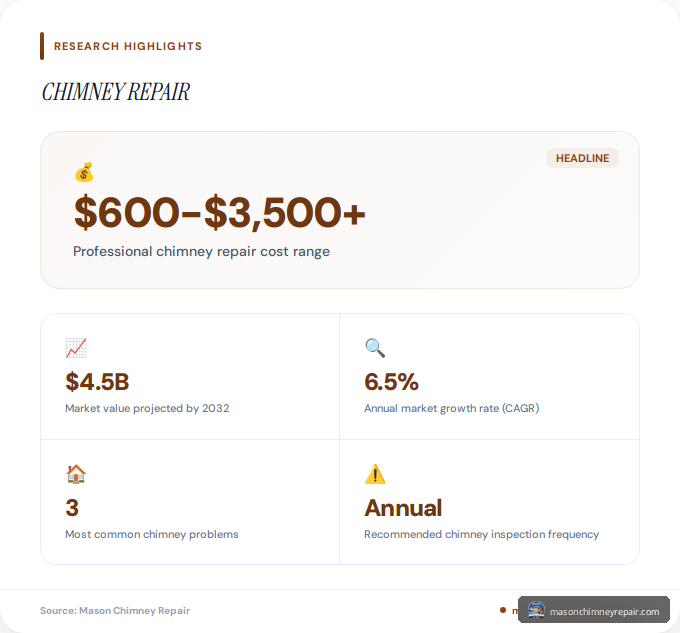
Chimney repair costs vary significantly based on damage extent, accessibility, materials selected, and regional labor rates. Understanding this pricing landscape helps homeowners budget appropriately and recognize the value of quality workmanship.
Industry data shows that average revenue per job (ARPJ) for chimney repairs stands at $600, compared to just $180 for cleaning services. However, pricing ranges dramatically based on project specifics. Minor tuckpointing might cost $500 to $1,200, while complete chimney rebuilds can range from $7,000 to $25,000+ depending on height, materials, and structural complexity.
According to chimney service profitability analysis, repair services comprise approximately 20% of industry revenue in 2026, with projections targeting 40% by 2030 as businesses focus on higher-value services. This shift reflects the superior profitability of repair work, which generates three times the revenue of standard cleaning.
Pricing for chimney repair varies based on your specific project requirements, structural conditions, and material selections. Premium craftsmanship and lasting solutions require proper materials and experienced technicians. Contact professionals for a detailed assessment and custom quote that reflects your chimney’s unique needs.
Crown repair typically costs $800 to $2,500, depending on crown size and damage severity. Complete crown replacement requires specialized concrete work and proper curing to ensure long-term water resistance.
Flashing replacement generally ranges from $700 to $2,800+, with costs influenced by roof pitch, chimney size, and material choice. Copper flashing, while more expensive initially, offers superior longevity compared to aluminum alternatives.
Flue liner replacement represents one of the more substantial investments, typically ranging from $2,500 to $7,000+ for stainless steel liners, with cast-in-place systems commanding $4,000 to $12,000+ depending on chimney height and accessibility challenges.
Professional chimney repair encompasses numerous specialized services, each addressing specific structural or functional issues. Understanding these repair types helps homeowners communicate effectively with contractors and make informed decisions.
Tuckpointing and repointing involve removing deteriorated mortar joints and replacing them with fresh mortar. This essential maintenance preserves structural integrity and prevents water infiltration. Properly executed tuckpointing can extend chimney life by decades, though it requires skilled masons who match mortar composition to existing materials.
Chimney crown repair or replacement protects the entire chimney structure from top-down water damage. Professionals typically recommend crown replacement when cracks exceed certain thresholds or when the existing crown was improperly constructed without proper slope or drip edge.
Waterproofing treatments have evolved significantly, with the chimney waterproofing services market estimated at $250 million in 2025, growing at a CAGR of 5-7%. Modern breathable sealants allow moisture vapor to escape while preventing liquid water penetration, addressing a key weakness in older waterproofing approaches.
The comprehensive services offered by Mason Chimney Repair include masonry restoration, structural stabilization, and preventive waterproofing, reflecting industry best practices for long-term chimney health in high humidity areas like West Florida, in coastal cities like Clearwater and Saint Petersburg Fl.
Chimney cap installation or replacement provides critical protection against rain, snow, animals, and debris. Quality caps feature mesh screening to prevent animal entry while allowing smoke and gases to vent freely. Stainless steel caps offer superior durability in harsh weather conditions.
Chimney rebuilding becomes necessary when structural damage extends beyond repair or when the chimney leans dangerously. As discussed in chimney rebuilding fundamentals, partial rebuilds address damage above the roofline, while complete rebuilds reconstruct from the foundation up.
The question of DIY versus professional chimney repair deserves careful consideration, as safety, building codes, and long-term effectiveness all factor into this decision. While homeowners can handle certain minor maintenance tasks, most chimney repairs require professional expertise.
DIY limitations become apparent quickly with chimney work. Height-related safety risks, specialized tools requirements, and the technical knowledge needed to properly diagnose problems make most repairs unsuitable for homeowners. Improper repairs can create dangerous conditions, including carbon monoxide leaks or fire hazards that far exceed any cost savings.
Professional advantages extend beyond safety. Licensed chimney professionals carry specialized insurance, understand local building codes, and possess diagnostic equipment unavailable to homeowners. Many jurisdictions require permitted work and professional certification for structural chimney repairs, making DIY approaches legally problematic.
Expert technicians use advanced diagnostic methods, including internal camera inspections that reveal hidden damage invisible from ground level. This technology integration represents a key 2026 industry trend, providing transparent documentation that builds homeowner trust and ensures comprehensive repairs.
Building codes and insurance considerations further complicate DIY repairs. Many insurance policies require professional certification for fire-safety-related repairs. Unpermitted work can create liability issues if property damage or injuries occur, potentially voiding coverage when you need it most.
Regular chimney inspections form the foundation of preventive maintenance, catching minor issues before they escalate into expensive repairs or dangerous conditions. Industry standards and safety organizations provide clear guidance on inspection frequency.
Annual inspections represent the minimum recommended frequency for all chimney systems, regardless of use intensity. Pre-heating season inspections, typically performed in late summer or early fall, allow time to complete necessary repairs before heavy fireplace or furnace use begins.
According to industry analysis of chimney safety service demand, homeowners increasingly prioritize professional inspections as awareness of chimney-related hazards grows. This trend particularly affects areas with aging housing stock and extreme weather patterns.
Level classifications define inspection scope. Level 1 inspections examine readily accessible portions during annual maintenance. Level 2 inspections, required after significant events like chimney fires, lightning strikes, or property transfers, include internal camera examination of flue systems. Level 3 inspections involve invasive procedures to access hidden areas when serious problems are suspected.
High-use chimneys may warrant more frequent professional attention. Wood-burning systems producing substantial creosote require annual cleaning and inspection, while gas appliances generate less visible wear but still need regular safety verification.
Water represents the single greatest threat to chimney longevity and structural integrity. Understanding waterproofing’s critical role helps homeowners prioritize this often-overlooked aspect of chimney maintenance.
Masonry’s porous nature allows water absorption, creating numerous problems. Freeze-thaw cycles cause absorbed water to expand, cracking bricks and mortar. Interior water penetration rusts metal components, deteriorates flue liners, and damages surrounding home structures. The chimney waterproofing market reflects these concerns, with residential applications accounting for 60% of revenue due to aging housing and increasing weather damage.
Modern waterproofing products employ breathable technology that prevents liquid water entry while allowing moisture vapor to escape. This critical distinction avoids trapping existing moisture, which earlier non-breathable sealants problematically did. Eco-friendly formulations gain market traction as homeowners prioritize environmental responsibility alongside performance.
Application timing significantly impacts waterproofing effectiveness. Products require dry masonry and appropriate temperatures for proper curing. Professional applicators assess moisture content before treatment and select products matched to specific masonry types and exposure conditions.
Benefits extend beyond structural protection. Waterproofed chimneys resist efflorescence, the white salt deposits that mar appearance. Water-resistant masonry also proves easier to clean and maintains better energy efficiency by preventing moisture-related thermal bridging.
The chimney repair industry embraces technological innovation, improving diagnostic accuracy, customer transparency, and repair quality. These 2026 trends reshape how professionals approach chimney service delivery.
Internal camera inspections have become standard practice among leading professionals, replacing verbal-only assessments with documented visual evidence. High-resolution cameras navigate flue systems, capturing detailed photos and videos that reveal hidden deterioration, blockages, or structural concerns invisible from exterior observation.
According to chimney company expectations for 2026, technology integration builds homeowner trust through transparency. Detailed written reports accompany visual documentation, providing clear justification for recommended repairs and creating valuable records for future reference.
Digital reporting systems enhance communication and recordkeeping. Cloud-based platforms store inspection histories, making it easy to track chimney condition over time and identify emerging patterns. Homeowners receive comprehensive reports via email, complete with annotated photos highlighting specific concerns.
Advanced materials improve repair durability and performance. Polymer-modified mortars offer superior adhesion and flexibility. Stainless steel components resist corrosion in demanding environments. Breathable sealants incorporate nanotechnology for enhanced water repellency without trapping moisture.
Smart home integration represents an emerging frontier, with North American markets benefiting from both stringent safety codes and smart home adoption. Carbon monoxide detectors with cellular alerts, automated damper controls, and chimney temperature monitoring systems add safety layers while appealing to tech-forward homeowners.
The chimney repair industry demonstrates robust growth prospects driven by demographic shifts, housing trends, and safety awareness. Understanding market dynamics provides context for service availability, pricing, and innovation trajectories.
North America dominates global market share, benefiting from stringent building codes, established chimney infrastructure, and strong safety cultures. Alternative projections estimate growth from $14.8 billion in 2025 at a CAGR of 6.6% to $26.3 billion by 2034, reflecting substantial demand in residential sectors.
Asia Pacific shows the highest regional growth rate at 7.5% CAGR, driven by urbanization and construction booms in China, India, and Japan. As these markets develop Western-style heating systems and fireplaces in premium properties, demand for professional chimney services expands correspondingly.
Residential segments lead across markets, fueled by home renovations, aging chimney infrastructure, and evolving safety regulations. Homeowners increasingly view chimney maintenance as essential rather than discretionary, particularly as awareness of carbon monoxide risks and fire hazards grows.
Profitability strategies emphasize value-added services. Industry analysis projects supply costs decreasing from 250% to 195% of revenue by 2030 through bulk purchasing and operational efficiencies. This margin improvement, combined with the shift toward higher-value repair services, positions chimney businesses for sustainable growth.
For professional services and detailed assessments, homeowners can contact Mason Chimney Repair for custom evaluations tailored to their specific chimney conditions and requirements.
Chimneys should receive professional inspection at least annually, preferably before the heating season begins in late summer or early fall. This frequency allows detection of creosote buildup, structural issues, or weather damage before heavy use, ensuring safe operation throughout winter months.
Common warning signs include visible cracks in masonry, crumbling mortar joints, water stains on walls or ceilings near the chimney, white salt deposits (efflorescence), rusted damper or firebox components, spalling bricks, tilting or leaning structure, and deteriorated chimney crown. Any of these indicators warrant professional inspection.
Most chimney repairs require professional expertise due to safety risks, specialized tools, building code requirements, and technical complexity. DIY attempts often create dangerous conditions or violate permit requirements. Professionals possess proper insurance, diagnostic equipment like internal cameras, and skills to ensure safe, code-compliant repairs.
Chimney cleaning removes creosote, soot, and debris from flue systems to maintain safe operation and prevent chimney fires. Repair addresses structural damage, deteriorating components, water infiltration, and safety hazards. While cleaning costs average $180 per job, repairs average $600+ and can reach several thousand dollars for extensive work.
Waterproofing is essential for chimney longevity, particularly for aging structures exposed to harsh weather. Water represents the primary cause of chimney deterioration through freeze-thaw damage, masonry erosion, and metal component rust. Modern breathable sealants prevent liquid water entry while allowing moisture vapor escape, protecting structural integrity without trapping existing moisture.
Repair duration varies significantly based on scope and complexity. Minor tuckpointing might require one to two days, while crown replacement typically takes two to three days including curing time. Flue liner installation ranges from one to three days depending on accessibility. Complete rebuilds can extend several weeks for extensive structural work and proper material curing.
A well-maintained chimney typically lasts 50 to 100 years, though individual components have shorter lifespans. Flue liners may need replacement every 20 to 30 years, crowns every 15 to 25 years, and mortar joints require repointing every 25 to 50 years depending on exposure and maintenance quality.
Coverage depends on damage cause and policy specifics. Insurance typically covers sudden, accidental damage like storm damage or lightning strikes but excludes gradual deterioration from normal wear or deferred maintenance. Review your policy and document all damage thoroughly when filing claims.
Common leak sources include damaged chimney crowns, deteriorated flashing where chimney meets roof, cracked masonry allowing water penetration, missing or damaged chimney caps, and condensation from improperly sized flue liners. Professional inspection identifies specific causes requiring targeted repairs.
Rebuilding becomes necessary when structural damage exceeds repair feasibility, the chimney leans more than 1 inch per 3 feet of height, extensive masonry deterioration affects structural integrity, or complete flue system replacement is needed. Professional assessment determines whether partial or complete rebuilding is appropriate.
Yes, damaged chimneys seriously compromise indoor air quality through multiple mechanisms. Cracked flue liners allow carbon monoxide and combustion gases into living spaces, deteriorated masonry permits moisture infiltration causing mold growth, and poor draft from structural issues creates smoke backdraft into homes.
Look for licensed, insured contractors with industry certifications like CSIA (Chimney Safety Institute of America) credentials. Request references, verify insurance coverage, obtain detailed written estimates, and confirm they use modern diagnostic equipment like internal cameras for thorough inspections.
Key maintenance includes annual professional inspections, regular cleaning based on use frequency, prompt repair of minor issues before escalation, waterproofing treatments every 5 to 10 years, proper chimney cap installation, and ensuring adequate ventilation to reduce condensation. Proactive maintenance prevents costly repairs and extends structural lifespan significantly.
Your chimney’s structural integrity directly impacts your family’s safety and your home’s value. Don’t wait for minor issues to escalate into expensive emergencies or dangerous conditions. Professional chimney repair services provide the expertise, equipment, and materials needed for lasting solutions that protect your investment.
Schedule a comprehensive chimney inspection today to identify potential problems before they compromise your safety or require extensive reconstruction. Expert technicians provide transparent assessments with detailed documentation, helping you make informed decisions about necessary repairs and preventive maintenance.
Quick Answer
Chimney repair addresses structural damage, water leaks, and deteriorating masonry to maintain safe operation and prevent costly failures. Professional services average $600 to $3,500+ per repair depending on damage extent, materials, and accessibility, with the global chimney repair services market projected to reach $4.5 billion by 2032. Annual inspections and prompt repairs are essential for homeowner safety and property value preservation.
| Problem Type | Common Causes | Urgency Level |
|---|---|---|
| Cracked Masonry | Freeze-thaw cycles, settling | High |
| Crown Damage | Weather exposure, poor construction | High |
| Flashing Leaks | Age, improper installation | Immediate |

Chimneys should receive professional inspection at least annually, preferably before the heating season begins in late summer or early fall. This frequency allows detection of creosote buildup, structural issues, or weather damage before heavy use, ensuring safe operation throughout winter months.
Common warning signs include visible cracks in masonry, crumbling mortar joints, water stains on walls or ceilings near the chimney, white salt deposits (efflorescence), rusted damper or firebox components, spalling bricks, tilting or leaning structure, and deteriorated chimney crown. Any of these indicators warrant professional inspection.
Most chimney repairs require professional expertise due to safety risks, specialized tools, building code requirements, and technical complexity. DIY attempts often create dangerous conditions or violate permit requirements. Professionals possess proper insurance, diagnostic equipment like internal cameras, and skills to ensure safe, code-compliant repairs.
Chimney cleaning removes creosote, soot, and debris from flue systems to maintain safe operation and prevent chimney fires. Repair addresses structural damage, deteriorating components, water infiltration, and safety hazards. While cleaning costs average $180 per job, repairs average $600+ and can reach several thousand dollars for extensive work.
Waterproofing is essential for chimney longevity, particularly for aging structures exposed to harsh weather. Water represents the primary cause of chimney deterioration through freeze-thaw damage, masonry erosion, and metal component rust. Modern breathable sealants prevent liquid water entry while allowing moisture vapor escape, protecting structural integrity without trapping existing moisture.
Repair duration varies significantly based on scope and complexity. Minor tuckpointing might require one to two days, while crown replacement typically takes two to three days including curing time. Flue liner installation ranges from one to three days depending on accessibility. Complete rebuilds can extend several weeks for extensive structural work and proper material curing.
A well-maintained chimney typically lasts 50 to 100 years, though individual components have shorter lifespans. Flue liners may need replacement every 20 to 30 years, crowns every 15 to 25 years, and mortar joints require repointing every 25 to 50 years depending on exposure and maintenance quality.
Coverage depends on damage cause and policy specifics. Insurance typically covers sudden, accidental damage like storm damage or lightning strikes but excludes gradual deterioration from normal wear or deferred maintenance. Review your policy and document all damage thoroughly when filing claims.
Common leak sources include damaged chimney crowns, deteriorated flashing where chimney meets roof, cracked masonry allowing water penetration, missing or damaged chimney caps, and condensation from improperly sized flue liners. Professional inspection identifies specific causes requiring targeted repairs.
Rebuilding becomes necessary when structural damage exceeds repair feasibility, the chimney leans more than 1 inch per 3 feet of height, extensive masonry deterioration affects structural integrity, or complete flue system replacement is needed. Professional assessment determines whether partial or complete rebuilding is appropriate.
Yes, damaged chimneys seriously compromise indoor air quality through multiple mechanisms. Cracked flue liners allow carbon monoxide and combustion gases into living spaces, deteriorated masonry permits moisture infiltration causing mold growth, and poor draft from structural issues creates smoke backdraft into homes.
Look for licensed, insured contractors with industry certifications like CSIA (Chimney Safety Institute of America) credentials. Request references, verify insurance coverage, obtain detailed written estimates, and confirm they use modern diagnostic equipment like internal cameras for thorough inspections.
Key maintenance includes annual professional inspections, regular cleaning based on use frequency, prompt repair of minor issues before escalation, waterproofing treatments every 5 to 10 years, proper chimney cap installation, and ensuring adequate ventilation to reduce condensation. Proactive maintenance prevents costly repairs and extends structural lifespan significantly.
Your chimney’s structural integrity directly impacts your family’s safety and your home’s value. Don’t wait for minor issues to escalate into expensive emergencies or dangerous conditions. Professional chimney repair services provide the expertise, equipment, and materials needed for lasting solutions that protect your investment.
Schedule a comprehensive chimney inspection today to identify potential problems before they compromise your safety or require extensive reconstruction. Expert technicians provide transparent assessments with detailed documentation, helping you make informed decisions about necessary repairs and preventive maintenance.